Credit scores, explained: how to build a great one
What a credit score measures, the five factors behind it, how to reach 760 and beyond, and what collecting points really does to a score.
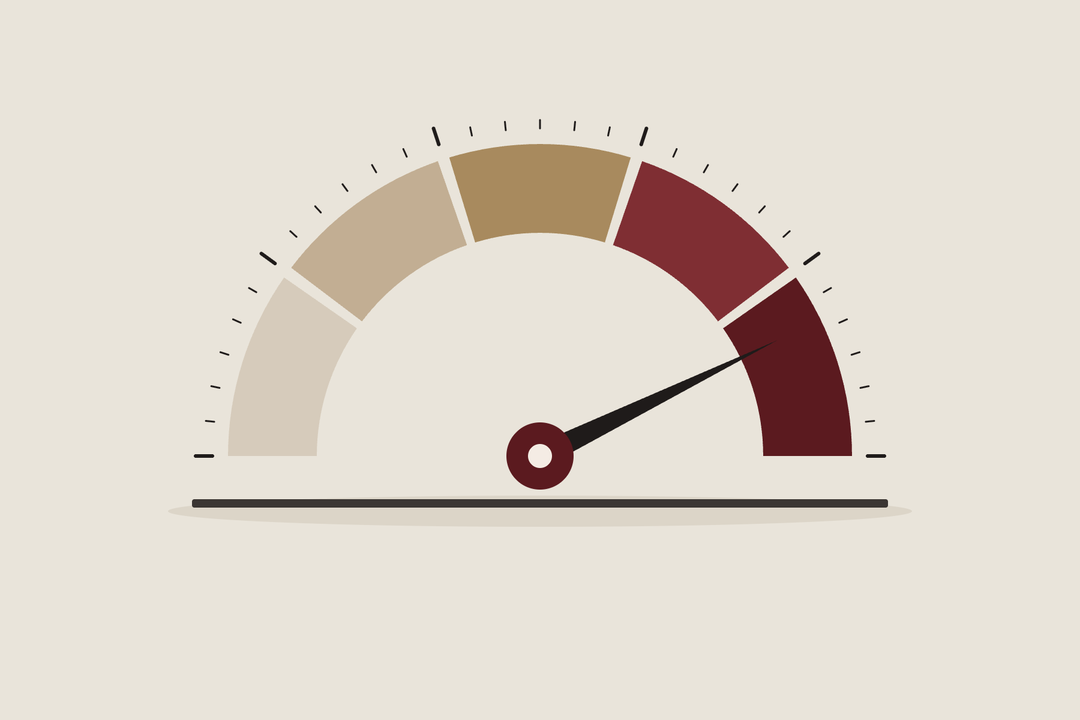
A great credit score comes from two habits more than anything else: paying every bill on time, and keeping card balances small next to card limits. Those two make up 65% of a FICO Score. The rest is mostly time.
This guide covers what a score is, what moves it, and what collecting points does to it, which is less than most people fear.
The short version
300–850
The FICO Score range
670 good, 740 very good, 800+ exceptional
714
The average US FICO Score
FICO, spring 2026
760
A score worth aiming for
Above it, most lenders already offer their best terms
- Where most people are: the average sits in the "good" band, and a record 48.1% of people now score 750 or higher, according to FICO.
- Why 760 is enough: above it, approvals and rates rarely hinge on a few more points. The remaining gains mostly come from age.
- What applying for a card costs: usually a small, temporary dip of a few points. A single missed payment costs far more than any number of applications.
What a credit score is
A credit score is a three-digit estimate of how likely someone is to repay borrowed money, worked out from the record in their credit report. Lenders use it to decide whether to approve an application and at what rate.
The reports. Three credit bureaus, Equifax, Experian and TransUnion, each keep a separate report. Banks send them account details every month: limits, balances, payments and late payments. The three reports often differ a little, because not every lender reports to all three.
The scores. Two companies turn those reports into scores:
| Score | Range | Where it shows up |
|---|---|---|
| FICO Score (FICO 8 is the most common version) | 300–850 | Most card and auto decisions; Classic FICO for most mortgages |
| VantageScore 4.0 | 300–850 | Free score apps and bank dashboards; since 2026 also accepted for some Fannie Mae and Freddie Mac mortgages |
| Industry versions, such as FICO Bankcard Score 8 | 250–900 | Card issuers; Citi shows this one free to cardholders |
That is why the number in one app rarely matches the number in another: each is a different model reading a different bureau's report on a different day. The habits that move one move all of them, so the rest of this guide treats "the score" as one thing.
What a score doesn't look at: income, savings, job, age, address or marital status. A high earner with late payments scores lower than a modest earner who pays on time.
The five factors
FICO groups everything in a credit report into five factors and publishes how much each one weighs. The weights can vary from one person to another.
1. Payment history (35%). Whether bills were paid on time. A payment counts as late on the report once it is 30 days past due, and it stays there for seven years. Its weight fades as it ages, but a recent late payment is the single most damaging thing for a strong score. Collections, charge-offs and bankruptcies sit here too.
2. Amounts owed (30%). Mostly credit utilization: card balances as a share of card limits, both across all cards and on each card. $1,500 owed on $15,000 of limits is 10%. Lower is better, and under 10% is where the highest scores tend to sit. The good news: in most scores, utilization has no memory. Pay the balances down and the score recovers as soon as the new balances are reported.
3. Length of credit history (15%). The age of the oldest account, the newest, and the average across all of them. Time is the only way to build this, which is why an old no-fee card is worth keeping open.
4. New credit (10%). Recent applications (hard inquiries) and recently opened accounts. For most people an application costs fewer than five points, according to FICO; scores count inquiries for 12 months, and they drop off the report after two years. Rate-shopping for a mortgage, auto or student loan within a short window counts as one inquiry. Card applications don't get that treatment.
5. Credit mix (10%). Having both revolving credit (cards) and installment loans (car, student, mortgage). It is a small factor, and taking on a loan just to improve it rarely makes sense.
How to build a great score
The playbook is the same at every level: automate on-time payments, keep reported balances small, and let time do the rest. What changes is where to start.
Starting from nothing
Get one card
A student card, a no-fee starter card, or a secured card, where a deposit of a few hundred dollars becomes the limit. A credit file usually needs about six months of activity before a FICO Score appears.
Or borrow some history
Being added as an authorized user on a parent's or partner's long-standing card, with a clean record and a low balance, can bring that card's age and payment record onto a new file.
Use it lightly, pay it in full
One small recurring bill on the card and autopay for the full statement balance is enough to build a record.
Building toward 740 and above
Set up autopay on every card
At least for the minimum, so a busy month never turns into a late payment. Then pay the full statement balance by hand, or set autopay to the full balance.
Watch the statement balance
Most issuers report the balance shown on the statement, not the balance after the due date. Paying a large purchase down before the statement closes keeps reported utilization low, even for cards paid in full every month.
Ask for higher limits
A higher limit with the same spending lowers utilization. Some issuers review limit increases without a hard inquiry; it is worth asking which before requesting.
Fix anything wrong on the reports
Errors are common and free to dispute. See Checking and fixing below.
From very good to exceptional
Keep the oldest cards open
Downgrading an annual-fee card to a no-fee version from the same bank usually keeps the account and its age.
Keep total utilization in single digits
With at least one card reporting a small balance. A report showing $0 on every card can score slightly lower than one showing a little use.
Space out applications
And give the file time. Above about 760, the extra points mostly reflect age and a long clean record.
If something has gone wrong
A payment less than 30 days late usually isn't reported, so pay it at once. For a one-off slip on an otherwise clean history, a polite request to the issuer to remove it (a goodwill request) sometimes works. Collections and charge-offs take longer, but their weight fades every year, and the habits above keep working underneath them.
Credit scores and points
Collecting points means opening cards for their welcome offers, and that worries a lot of first-timers. Done with the habits above, it usually helps a score over time: every new card adds to total limits, which lowers utilization. The costs are small and short-lived.
| What happens | Effect on the score | How long |
|---|---|---|
| Applying (hard inquiry) | Usually fewer than 5 points per application | Counted 12 months; off the report after 2 years |
| A new account opens | Average account age drops a little | Recovers as the account ages |
| A new limit is added | Utilization drops, often a gain | As long as the card stays open |
| One payment 30+ days late | Can cost far more than all of the above | On the report 7 years |
Common myths
Does checking my own score lower it?
No. Checking your own score or report is a soft inquiry, and soft inquiries don't affect scores.
Does carrying a balance build credit?
No. Scores see the reported balance, not whether interest was paid. Paying in full builds the same record with no interest.
Does closing a card help?
Usually not. Closing a card removes its limit, which can push utilization up. The account's history stays on the report for years, but the lost limit shows straight away.
Does a high income mean a high score?
No. Income isn't in the credit report, so it isn't in the score. Card applications ask for income, but that goes to the bank, not the bureaus.
Does paying off a loan raise the score?
Not always. Paying off an installment loan can lower the score slightly, because one fewer active account remains. It is still the right financial move.
Is the score in my app the score lenders see?
Not necessarily. Each app shows one model on one bureau's report, and a lender may pull a different version from a different bureau.
Do debit cards build credit?
No. A debit card draws on a bank account, so nothing is reported to the bureaus.
Checking and fixing
Reports, free every week. AnnualCreditReport.com is the official site for free reports from all three bureaus, and the bureaus made weekly access permanent in 2023. Look-alike sites may charge or collect data, so going there directly is the safe route. A report shows accounts, balances, payment history and inquiries, but no score.
Scores, free from the card. Most major issuers show a free score in their app, a FICO Score from some and a VantageScore from others. Watching one source over time is more useful than comparing sources against each other.
Pull all three reports
Note anything that isn't yours, a payment marked late that was on time, or a paid debt still shown as owed.
Dispute it with each bureau
Online, with documents attached. Bureaus generally have 30 days to investigate.
Tell the lender too
A correction at the source fixes all three reports at once.
Medical bills. The three bureaus' own policies keep paid medical collections, and medical collections under $500, off reports, and unpaid medical collections don’t appear until they are a year old. A federal rule that would have kept medical bills off credit reports used by lenders was struck down in July 2025. Some states passed their own limits, but federal law may override them: in August 2026 a federal court blocked Texas’s.
Freezing credit
A freeze at each of the three bureaus blocks new accounts being opened in someone's name. It is free, doesn't affect the score, and can be lifted online for a day or two before a card application. With regular applications, it is worth knowing how to lift and refreeze quickly.
Airline, hotel and card names and logos are trademarks of their owners, used only to identify their programs. Points Atelier is not affiliated with or endorsed by them.